Hot Springs in Pai: Which One Is Right for You?
Sai Ngam’s clear forest stream, Tha Pai’s steaming 80°C source, free Muang Paeng and the Pong Dueat geyser — compared side by side
Written by Nolo Hub Pai
Updated by the Nolo team, November 2026
tl;dr
Pai has four hot springs you can soak in, and no two are alike. If you’re choosing just one, we’d go with Sai Ngam: a warm stream running through the forest, with the clearest water of the four and a comfortable warmth all year round.
The short answer
- Tha Pai
- Close to town, with several soaking pools and eggs at the source
- Sai Ngam
- A warm, clear forest stream, and our pick
- Muang Paeng
- Free and basic, and worth it for the drive
- Pong Dueat
- A geyser to see, then separate pools to soak in; about 60 km out
Pai’s four hot springs side by side
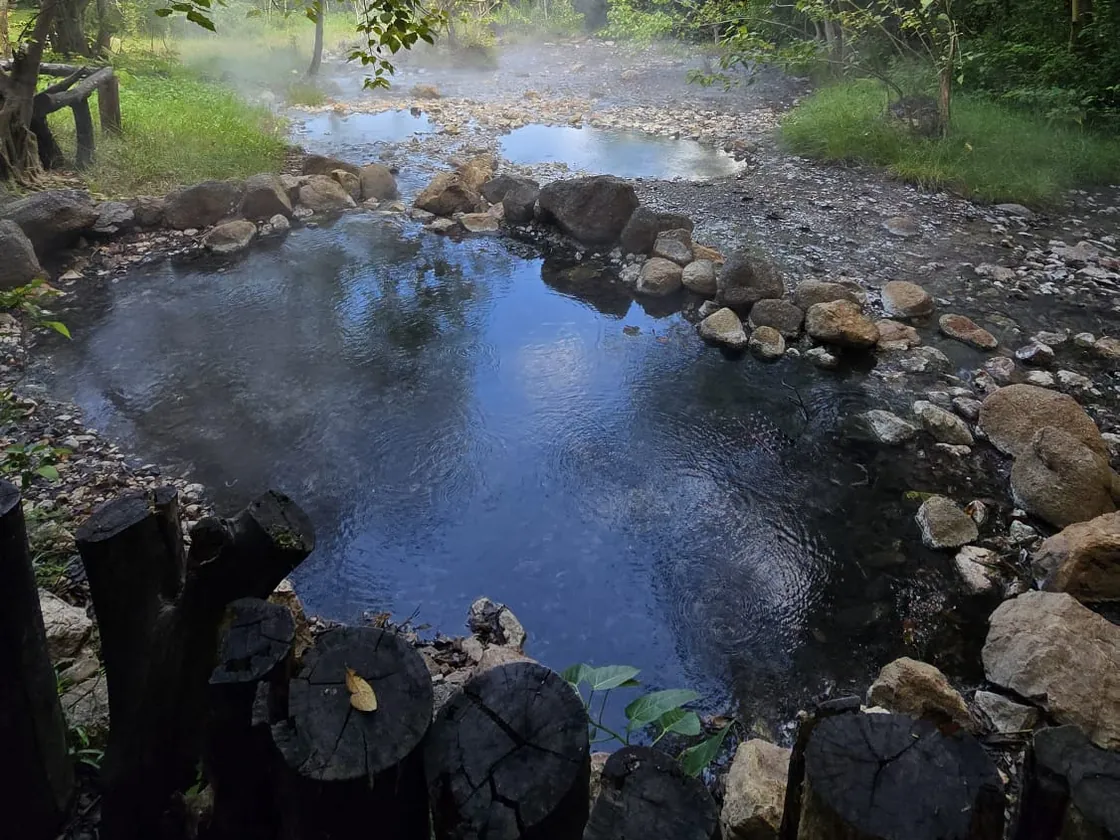
- Tha Pai
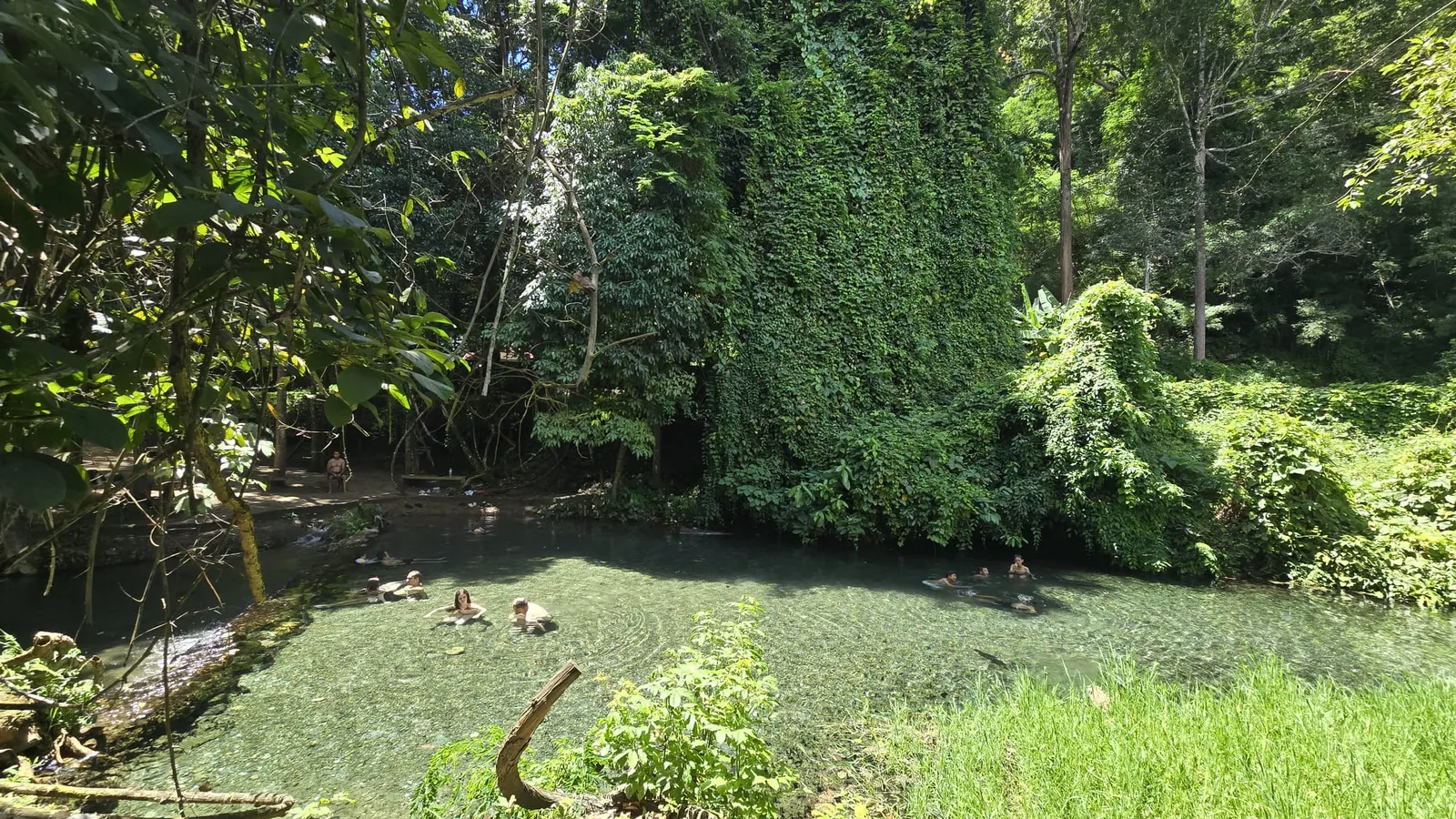
- Sai Ngam
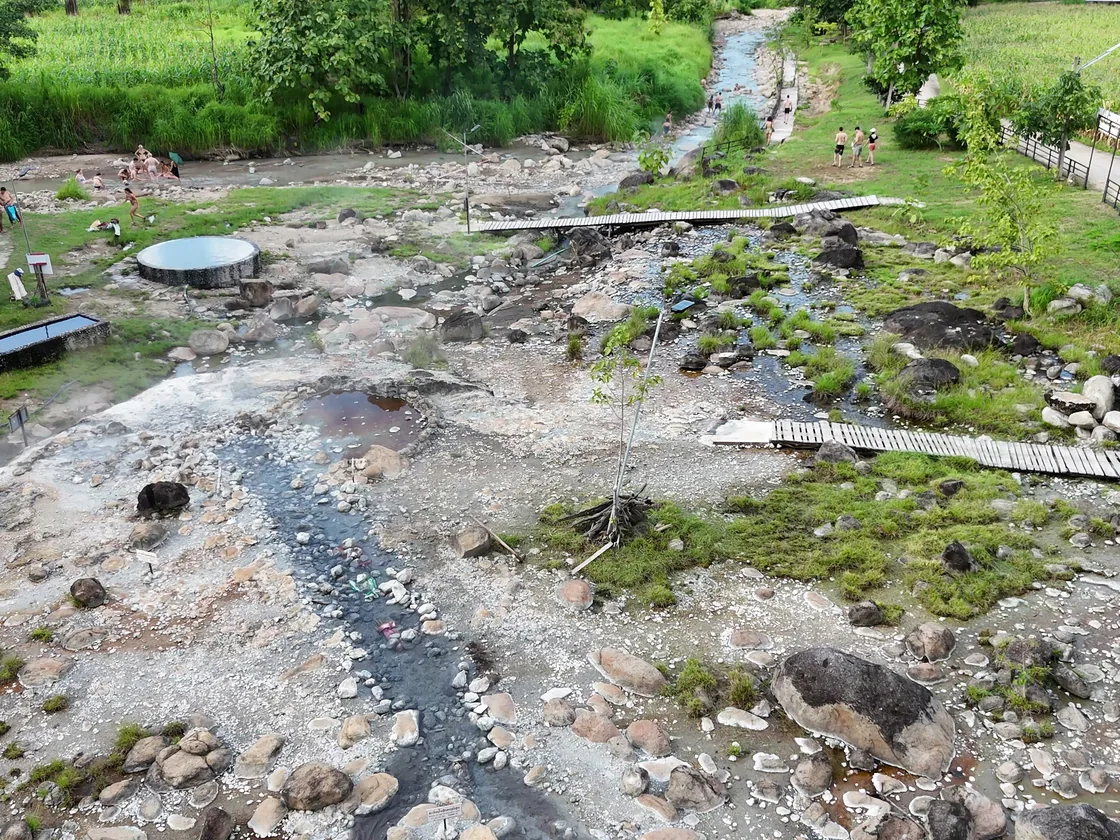
- Muang Paeng
- Pong Dueat
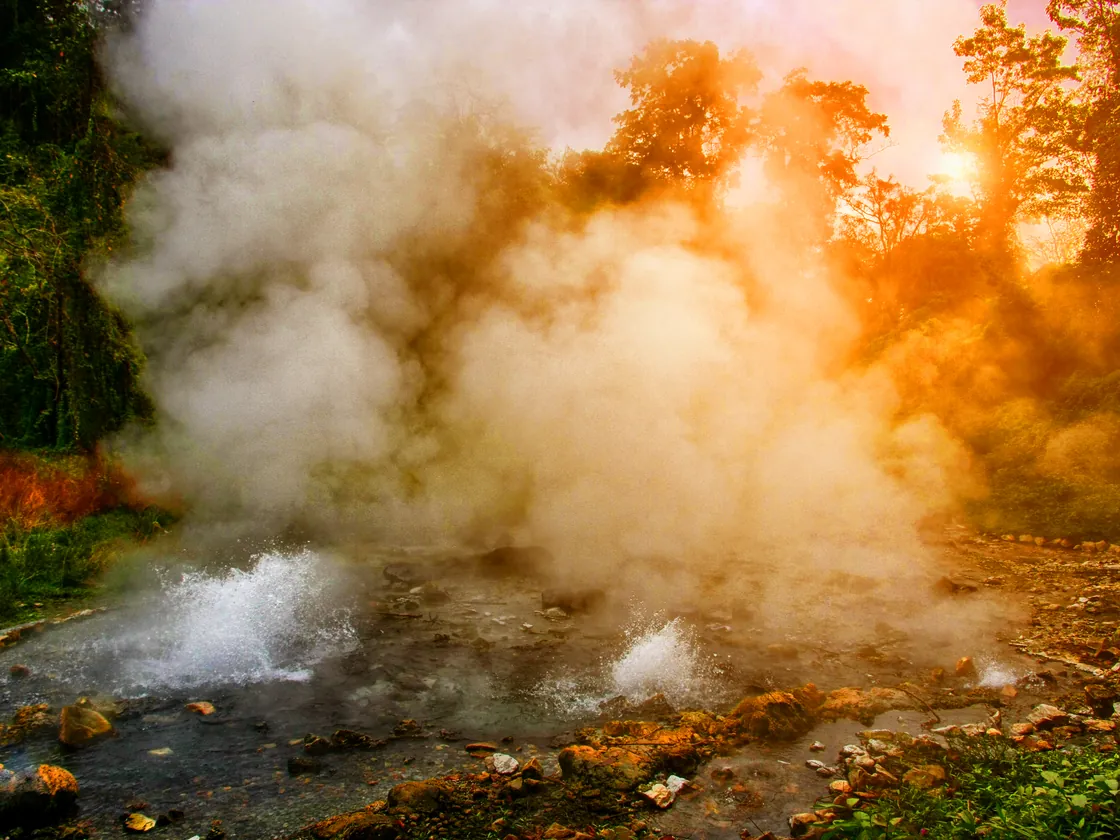
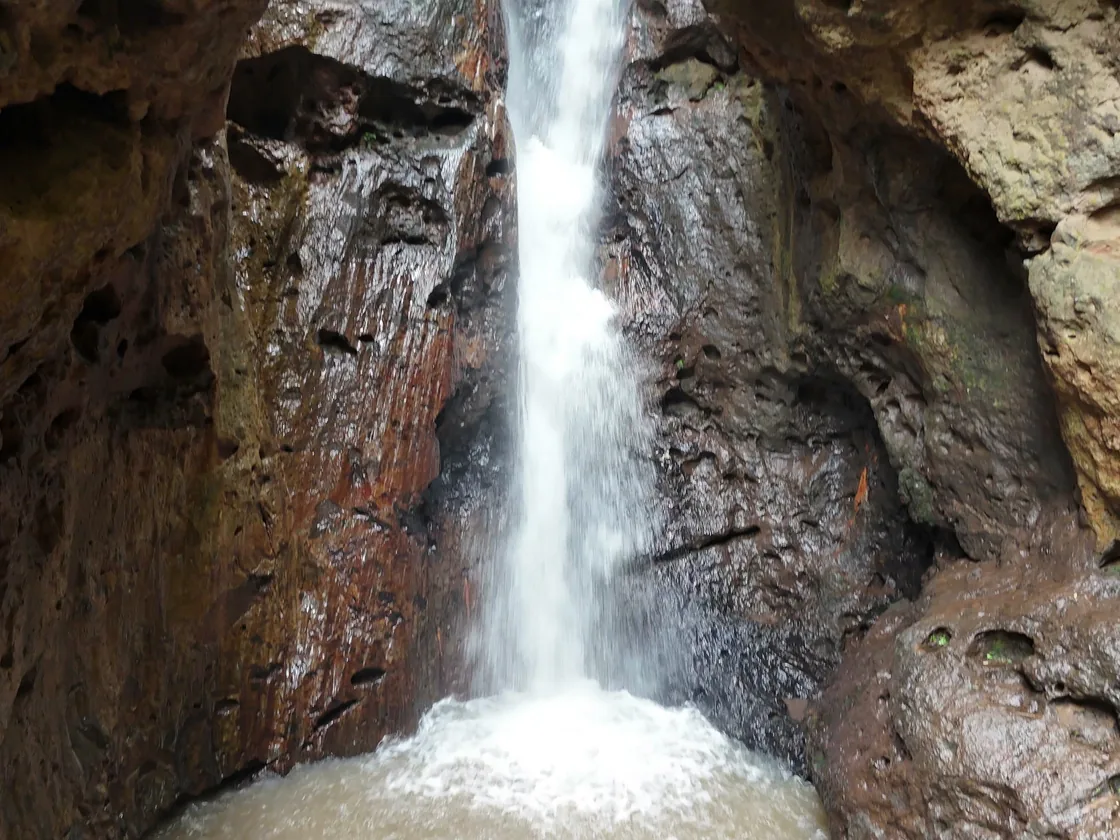
Photo (cropped): Chaiyathat, CC BY-SA 4.0, via Wikimedia Commons
Tha Pai
- From Nolo Hub Pai
- 8.8 km, south
- Best for
- Staying close to town
- Entry (foreign adult)
- 300 baht, plus 20 for a motorbike
- Hours
- 08:00–18:00
- In the pools
- From hot to lukewarm, pool by pool
- What it’s like
- A national-park spring: a steaming source up top, pools to soak in below
- Eggs
- Cooked in bamboo baskets at the source
Sai Ngam
- From Nolo Hub Pai
- 18.8 km, north-west
- Best for
- Nature lovers
- Entry (foreign adult)
- 200 baht, plus 30 for a motorbike; cash only
- Hours
- 09:00–17:00
- In the pools
- Warm to lukewarm
- What it’s like
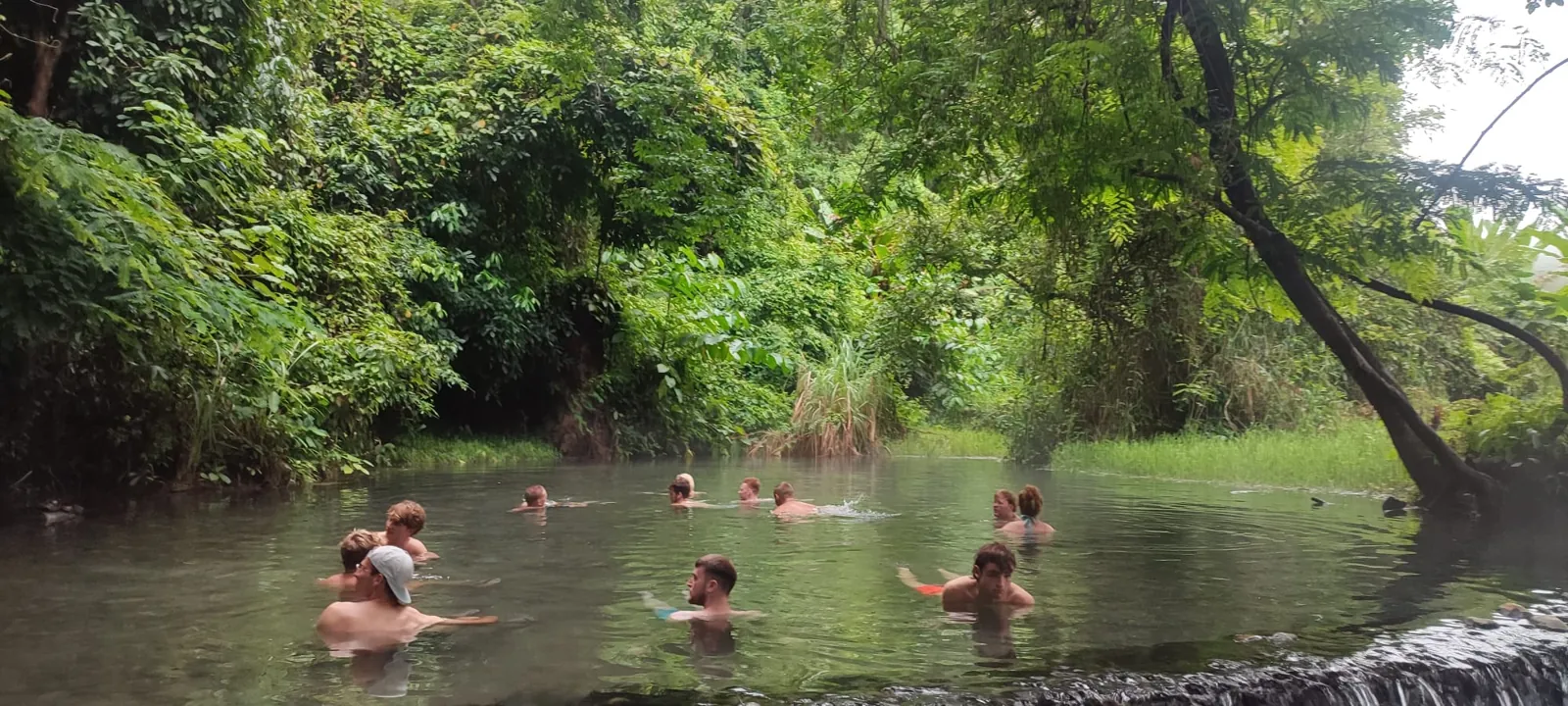
- A clear, warm stream stepping down through the forest
- Eggs
- No
Muang Paeng
- From Nolo Hub Pai
- 32 km, south-west
- Best for
- Motorbike riders: the drive out is beautiful
- Entry (foreign adult)
- Free
- Hours
- 06:00–18:00
- In the pools
- Hot to warm
- What it’s like
- A natural spring in the countryside, with small spots to soak
- Eggs
- Yes, and sold at the spring
Pong Dueat
- From Nolo Hub Pai
- About 60 km, towards Chiang Mai
- Best for
- Riders on their way into or out of Pai; it isn’t close to town
- Entry (foreign adult)
- 300 baht; communal pools included, private tubs extra
- Hours
- Around 08:00–17:00
- In the pools
- Warm to hot
- What it’s like
- A geyser to see, then separate pools and private tubs to soak in
- Eggs
- Yes
Fees and hours as last checked on each spring’s own page, September 2026.
How Pai’s four hot springs compare on the ground
- Sai Ngam Hot Spring (18.8 km north-west, 200 THB + 30 THB motorbike — our pick): Sai Ngam is a clear, sandy-bottomed stream stepping down through the forest over low stone weirs, with none of Tha Pai’s sulphur smell. The water comes up through gravel at a comfortable warm-to-lukewarm temperature, so you can sit in the shaded pools year-round. Note that you pay in cash at the sanctuary checkpoint 4 km before the pools, and the final stretch of road has some narrow, steep hills.
- Tha Pai Hot Spring (8.8 km south, 300 THB + 20 THB motorbike): The closest hot spring to town, set inside Huai Nam Dang National Park just off Highway 1095 near the Pai Memorial Bridge. You can walk up to the steaming 75–80°C source to cook eggs in woven bamboo baskets (at 80°C, the yolks set while the whites stay soft), then work your way downhill through a series of bathing pools ranging from hot near the top to lukewarm further down.
- Muang Paeng Hot Spring (32 km south-west, free): Pai’s only free hot spring you can soak in. In a quiet countryside valley along Highway 1265 (45–60 minutes from Pai), a steaming 95–96°C source mounds up through pale travertine rock, feeding a round stone pool and long soaking channels downstream. Eggs are sold at the spring between 6am and 6pm, and for confident scooter riders the countryside drive out is half the draw.
- Pong Dueat Geyser (about 60 km towards Chiang Mai, 300 THB): Tucked into the forest 6.5 km off Highway 1095 (turn-off around km 42), Pong Dueat is the one place where you watch near-boiling 98°C water surge from natural vents before heading back to the ranger station to soak in separate cooled communal pools or hourly private tubs. Because the Chiang Mai–Pai minivans don’t stop here, it’s best for riders and drivers with their own vehicle travelling between Chiang Mai and Pai.
Tickets and same-day passes: which ones share?
- Sai Ngam and Pam Bok Waterfall share a ticket: Both sit inside the Lum Nam Pai Wildlife Sanctuary. Your date-stamped 200 THB sanctuary ticket covers admission to both on the same day, in either order — after Pam Bok, Sai Ngam costs only the 30 THB motorbike fee (or 60 THB for a car) at its gate, so visiting both in one day costs 230 THB total on one scooter (430 THB for two people sharing a scooter). They are on opposite sides of town, though (Pam Bok is 8.2 km south-west; Sai Ngam is 18.8 km north-west).
- Tha Pai and Pong Dueat don’t share a ticket with the sanctuary — or with each other: Both are in Huai Nam Dang National Park (300 THB per foreign adult), so a sanctuary pass from Sai Ngam or Pam Bok doesn’t work at either one, and Tha Pai and Pong Dueat charge separate admissions even on the same day.
Pairing a hot spring with the rest of your day (and going without a scooter)
- South on Highway 1095 (Tha Pai): Tha Pai’s turn-off is near the Pai Memorial Bridge (9.1 km), a few minutes past the turn-off for Pai Canyon (7.3 km), making it easy to pair a morning or early-afternoon soak with sunset at the canyon.
- North-west on Highway 1095 (Sai Ngam): Combine a morning soak at Sai Ngam with the mountain viewpoint at Doi Kiew Lom further up Highway 1095, or ride across town afterwards to use the same day’s sanctuary ticket at Pam Bok Waterfall, with the Kho Ku So Bamboo Bridge just past it.
- South on Highway 1265 (Muang Paeng): About 20 km from Pai on the way out to Muang Paeng, pull over at Muang Rae to see its roadside geothermal well spouting near-boiling water. It’s a quick stop to look at, not somewhere to soak.
- No scooter? Pick Tha Pai: Because Tha Pai is only 8.8 km south of town on the main highway — close to Pai Canyon, the Memorial Bridge, the White Buddha and Two Huts — it’s the easiest spring to reach with a private truck and driver. See our guide to getting around Pai without a scooter.
Before you get in
- Bring a towel and dry clothes, and always test a pool with your hand or foot before stepping in — especially downstream from the 95°C source at Muang Paeng and the 80°C source at Tha Pai.
- Take silver jewellery off at Tha Pai: the sulphur in the water tarnishes silver quickly (and can darken gold alloys too). Sai Ngam has no sulphur smell.
- Bring cash for Sai Ngam: the sanctuary gate 4 km before the pools is cash only. Smoking, vapes and alcohol are banned at Sai Ngam, with posted fines of up to 2,000 baht.
- Take your rubbish home, especially at Muang Paeng, which has no rangers and sits in a working rural community.
Quick answers
Which hot spring in Pai is the best?
If you’re choosing just one, we recommend Sai Ngam Hot Spring (18.8 km north-west of Pai). It’s a crystal-clear, warm stream stepping down through the forest over low stone weirs, with no sulphur smell and a comfortable soaking temperature all year round.
How much do the hot springs in Pai cost?
Muang Paeng Hot Spring (32 km south-west) is completely free. Sai Ngam Hot Spring costs 200 THB per foreign adult plus 30 THB for a motorbike (or 60 THB for a car), paid in cash at the Lum Nam Pai Wildlife Sanctuary gate, and the same day’s ticket also covers Pam Bok Waterfall. Tha Pai Hot Spring costs 300 THB per foreign adult plus 20 THB for a motorbike, and Pong Dueat Geyser costs 300 THB per foreign adult.
Are there any free hot springs in Pai?
Yes — Muang Paeng Hot Spring (32 km south-west of Pai via Highway 1095 and Highway 1265) is Pai’s only free hot spring that you can soak in. (Sai Ngam used to be called the “secret free hot springs” in older blogs, but the wildlife sanctuary began charging admission in October 2019.)
Can you boil eggs at Pai’s hot springs?
You can cook eggs at Tha Pai Hot Spring (in bamboo baskets at the 80°C source, where yolks set and whites stay soft), at Muang Paeng Hot Spring (95–96°C source, with eggs sold on site from 6am to 6pm), and at Pong Dueat Geyser (98°C source). You cannot cook eggs at Sai Ngam Hot Spring, as its water emerges at a gentler bathing temperature.