Pong Dueat Geyser: Boiling Water in the Forest
A natural 98°C forest geyser and mineral baths in Huai Nam Dang National Park — 60 km from Pai off Highway 1095 (km 42), also spelled Pong Duet or Pong Dueat Pa Pae
Written by Nolo Hub Pai
Updated by the Nolo team, November 2026
tl;dr
Most of Pai’s hot springs are places you go to soak. At Pong Dueat, you can watch the hot water burst out of the ground first.
Also known as: Pong Duet · Pong Deuat · Pong Dueat Pa Pae · โป่งเดือดป่าแป๋
At a glance
- From Nolo Hub Pai
- Roughly 60 km towards Chiang Mai, about 1.5 hours each way; most people stop on their way into or out of Pai
- Location
- Inside Huai Nam Dang National Park, off Highway 1095 (Chiang Mai province side)
- Turn-off
- Around kilometre marker 42 on Highway 1095, followed by about 6.5 km of smaller paved mountain road
- Walk to the geyser
- A short forest trail and boardwalk, roughly 800 m from the parking area
- Park entry
- Does not share a ticket with Tha Pai Hot Spring; currently 300 THB for a foreign adult — as of September 2026
- Bathing
- Available separately from the geyser: communal pools included in the park ticket, private tubs rented by the hour
- Hours
- Generally around 08:00–17:00; confirm before making the trip
- Getting there
- Your own bike or vehicle — the Chiang Mai–Pai minivans don’t stop
- Map
- Google Maps · Apple Maps
Pong Dueat Pa Pae sits in a forested part of Huai Nam Dang National Park, on the Chiang Mai side of the mountains between Chiang Mai and Pai. A short walk from the parking area leads to a geothermal field where water bubbles and surges from vents in the earth. The water at the source is close to boiling, so this is the part you come to see. If you want to get in the water, there are separate bathing facilities near the ranger station where the thermal water has cooled enough for soaking.
It’s an unusual stop on the journey between Chiang Mai and Pai, or a longer outing from Pai if you’re keen to see the geyser itself.
The 800 m forest walk and the 98°C geyser
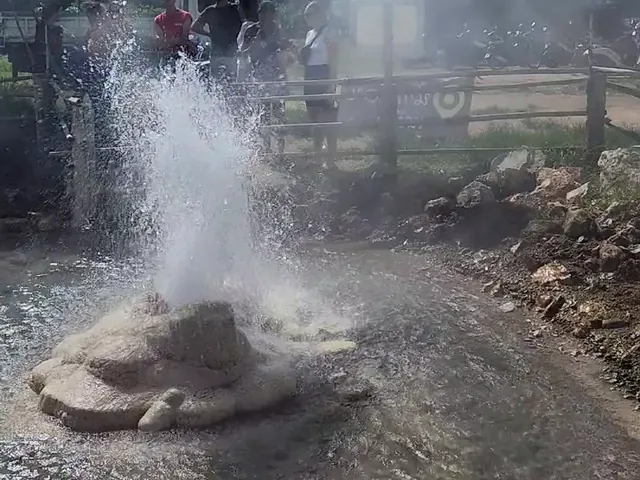
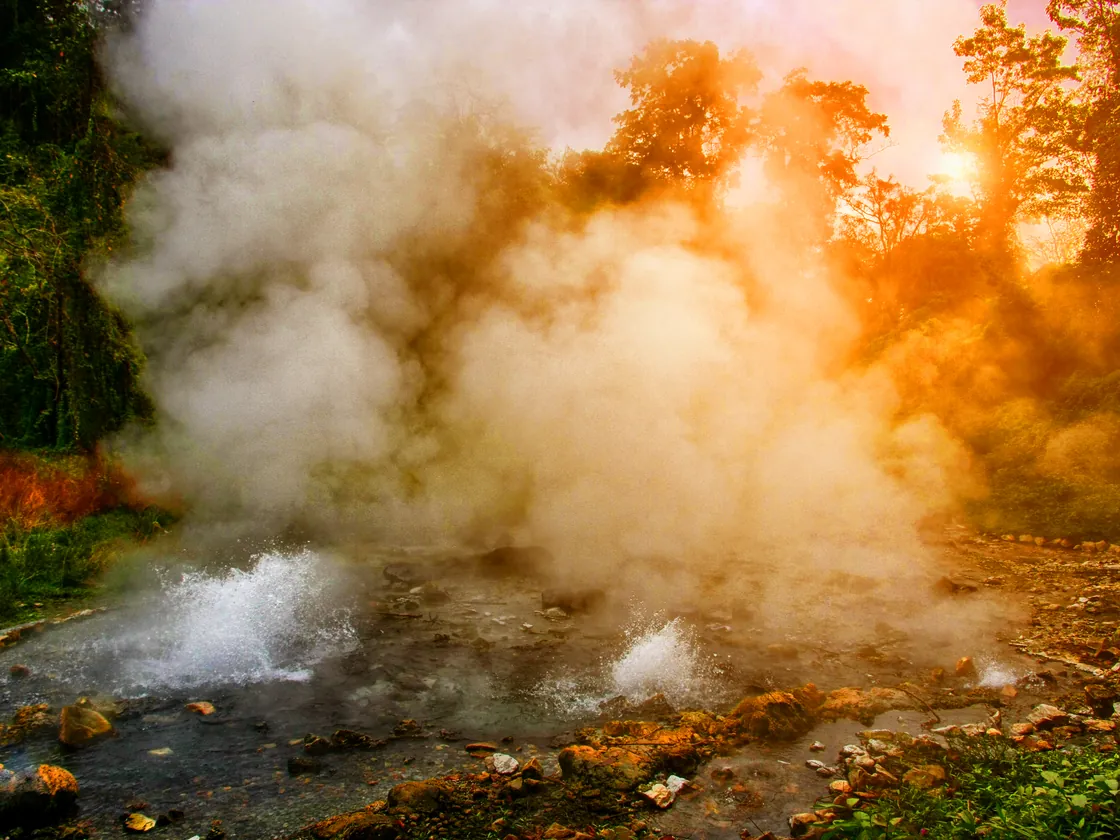
The trail takes you away from the ranger station and into the forest. It isn’t a demanding hike, but it makes the moment you reach the geothermal area more striking: steam rises among the trees, hot water moves through the ground, and the geyser sends bursts of water into the air.
Pong Dueat is a geyser-type hot spring, so no two eruptions are quite the same, and the height and force can vary. Don’t arrive expecting a towering jet that fires on cue. What you get is a living hot-spring system at work, with water bubbling, steaming and every so often surging upward. A geothermal survey puts the geyser at about a metre high, from three or four vents.
The source water is close to boiling, about 98°C at the vent. Stay on the marked paths and viewing areas rather than approaching the vents or testing the water. This part of Pong Dueat is for looking, not bathing.
Can you soak at Pong Dueat? Pools, tubs and cooking eggs
Yes, but away from the geyser.
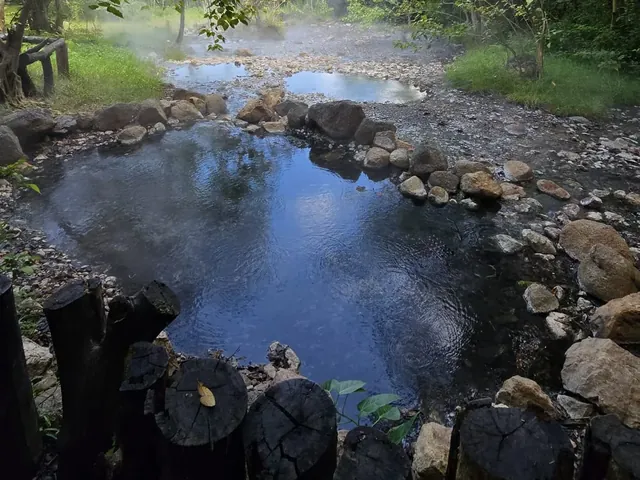
Near the ranger station there are managed mineral baths, filled with thermal water that has cooled enough to soak in. They’re a separate part of the visit: the communal pools are included in the park ticket, and private soaking tubs are rented by the hour. If a soak is important to your plans, check what’s open when you arrive and bring swimwear and a towel.
The near-boiling water erupting in the forest and the water in the bathing area come from the same geothermal landscape, but you don’t use them the same way.
If you’ve been to Tha Pai Hot Spring, the park’s egg board there points out a difference: eggs cooked at Pong Dueat come out with a soft yolk and a set white, the reverse of Tha Pai’s.
What makes Pong Dueat erupt?
The heat begins below the forest. Water seeps underground through cracks in the rock, warms as it travels deeper and finds its way back toward the surface. At Pong Dueat, pressure within that underground system helps push hot water and steam through openings in the ground.
The surrounding area contains granite, fractured rock and mineral veins, which have made Pong Dueat particularly interesting to geologists. You don’t need to know the geology to enjoy the visit, though. Watching the vents, you get the basic idea straight away: there’s enough heat and pressure under this patch of forest to send water back into daylight almost boiling.
A geyser that does this on its own is the rarer kind. The famous plume at San Kamphaeng, near Chiang Mai, comes out of a capped well with steel piping. Most of Thailand’s hot springs are still pools, Tha Pai doesn’t spout at all, and Muang Rae, south of Pai, is a drilled well.
โป่ง, pong, is a mineral lick or seep, where animals come for the salts, and เดือด, duet, means boiling, so the name just means the boiling seep.
Getting to Pong Dueat on Highway 1095 (km 42 turn-off)
Take Highway 1095 towards Chiang Mai and look for the signed Pong Dueat Pa Pae turn-off around km 42. From the highway, follow the smaller road for approximately 6.5 km to the ranger station and parking area.
Don’t follow directions to Huai Nam Dang’s main headquarters and viewpoint entrance around km 65–66. Pong Dueat is in the same national park but has its own turn-off farther towards Chiang Mai.
The road in is narrow and steep in places, and rain can make the drive harder. It’s a long mountain journey from Pai, especially by scooter, so give yourself time to get there and back instead of treating Pong Dueat as a quick stop outside town. It also works well as a stop if you’re travelling between Pai and Chiang Mai with your own vehicle.
Buses do pass along Highway 1095, but the geyser is still several kilometres from the turn-off on the main road. Don’t rely on being dropped there unless you’ve arranged a way in and back out. The minivans between Chiang Mai and Pai won’t stop there, so you’ll need your own bike or vehicle.
Tickets and hours (and why Tha Pai’s ticket doesn’t carry over)
Pong Dueat uses the Huai Nam Dang National Park entrance ticket. The current published rate is 300 THB for foreign adults. That covers the communal bathing pools, and private soaking tubs cost extra.
Tha Pai and Pong Dueat don’t share a ticket, even though they’re in the same national park. If you’re deciding between Pai’s closer springs and the ride out here, see our side-by-side guide to Pai’s four hot springs.
Pong Dueat is open during the day, with hours usually listed as around 08:00–17:00. Check current access before you set off from Pai, especially if you’re going all that way just for the geyser or the baths.
The geyser is the reason to travel this far, but there’s more to the visit than a few seconds of water in the air. Take the forest walk, give the vents time to show what they’re doing, and have a soak afterwards if the bathing area is open.
Quick answers
How far is Pong Dueat Geyser from Pai?
Pong Dueat is roughly 60 km from Pai toward Chiang Mai, about 1.5 hours each way. You take Highway 1095 to the signed Pong Dueat Pa Pae turn-off around kilometre marker 42, then follow the smaller side road for about 6.5 km to the ranger station. Most people stop on their way between Chiang Mai and Pai rather than making the trip out and back.
Can you swim or soak at Pong Dueat Geyser?
You can’t get into the geyser vents themselves — the water erupts at about 98°C and is fenced off for viewing from the boardwalk. However, near the ranger station there are separate mineral bathing pools where the water has cooled to soaking temperature. The communal pools are included in the 300 THB park ticket, and private tubs can be rented by the hour.
Does a Tha Pai Hot Spring ticket cover Pong Dueat on the same day?
No. Although both Tha Pai Hot Spring and Pong Dueat are inside Huai Nam Dang National Park, they have separate entrances, one just outside Pai and the other about 60 km away, and do not share an admission ticket.
Do the Chiang Mai to Pai minivans stop at Pong Dueat?
No. The minivans run straight along Highway 1095 and the geyser is 6.5 km down a side road from the km 42 turn-off, so you need your own scooter or car to visit.