Yi Peng in Pai
Northern Thailand’s Lanna festival of light — the four types of lanterns, why it shares the November full moon with Loy Krathong, and celebrating together
Written by Nolo Hub Pai
Updated by the Nolo team, November 2026
tl;dr
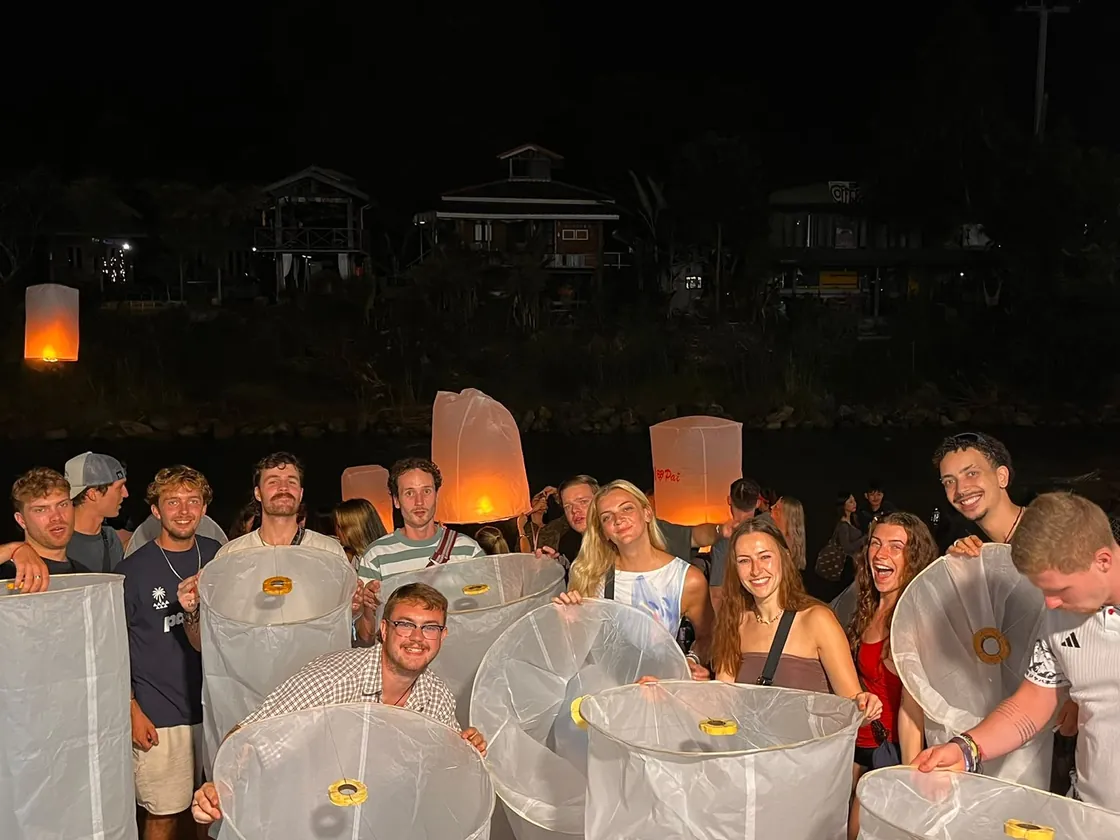
Yi Peng is the Lanna festival of light. It falls on the full moon of the second Lanna month (usually in November), the same night as Loy Krathong. In Pai, lanterns are hung up in the days before, decorating homes, shops and temples, and on the night, sky lanterns are released over town. It is free to join. At Nolo Hub Pai, we meet at 8pm on the night (Tuesday 24 November this year) for our own lantern release, once permission has been given, then go into town for the river and the bars. It’s free, and travellers from other hostels are welcome.
Also known as: ยี่เป็ง · Yee Peng
At a glance
- When
- The full moon of the second Lanna month (typically in November)
- How long
- One night
- Main celebration
- The primary festivities take place on the full moon night, though decorative lanterns line the town in the days prior
- Also celebrated as
- Loy Krathong, the nationwide tradition of floating candlelit offerings on water
- The 4 Lanna lanterns
- Khom Thue (handheld), Khom Loi (sky lanterns), Khom Khwaen (hanging), and Khom Phat (rotating)
- In Pai
- Sky lanterns are sold throughout town and released during the evening. Public celebrations are free to join
- With Nolo Hub Pai
- On Tuesday 24 November we gather at Nolo Hub Pai at 8pm, do a group lantern release at the hostel (only ever once permission has been given), and head into town together by truck. Free, and travellers from other hostels are welcome too
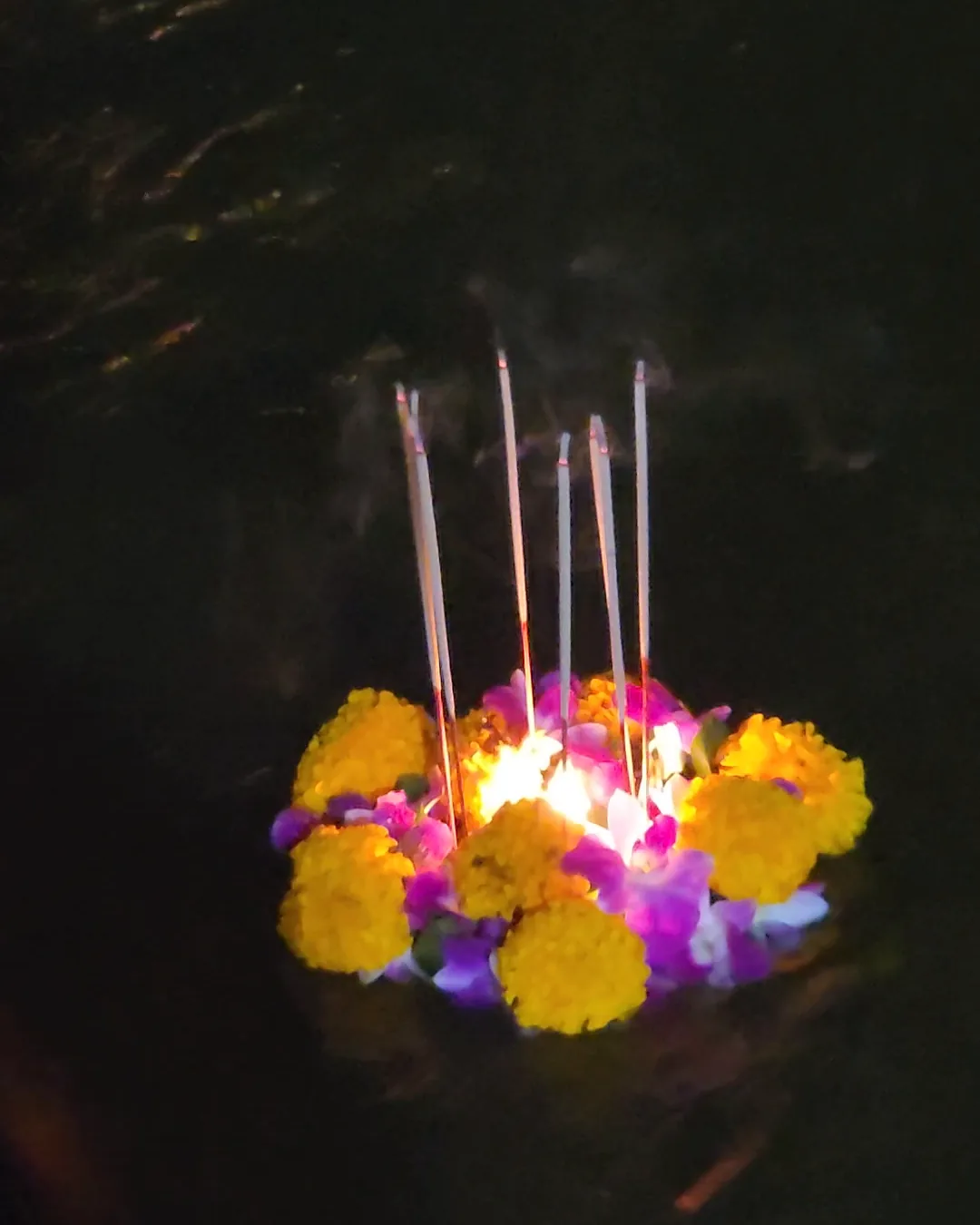
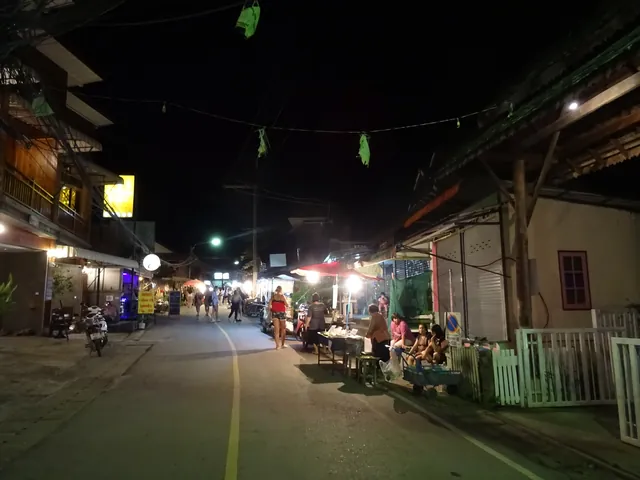
In the days leading up to the full moon, paper lanterns start to light up homes, local shops, and temples across Pai. On the night itself, sky lanterns drift up into the dark while candlelit krathongs float down the Pai River. You’ll often hear locals call the evening both Yi Peng and Loy Krathong, since two separate traditions fall on the same night.
Join our free Yi Peng night at Nolo Hub Pai
Spend the week leading up to the festival exploring Pai and watching the town fill with colour and light. On the night of the full moon, join locals along the riverbank to watch the sky lanterns go up and candlelight drift down the water.
At Nolo Hub Pai, we do our own group lantern release together at the hostel — only ever once permission has been given — and then head into town by truck to join the river celebrations and the bars afterwards. Check out our Loy Krathong in Pai guide for how the water offerings work on the same night. On Tuesday 24 November we meet at the hostel at 8pm. It’s free, and travellers from other hostels are welcome too.
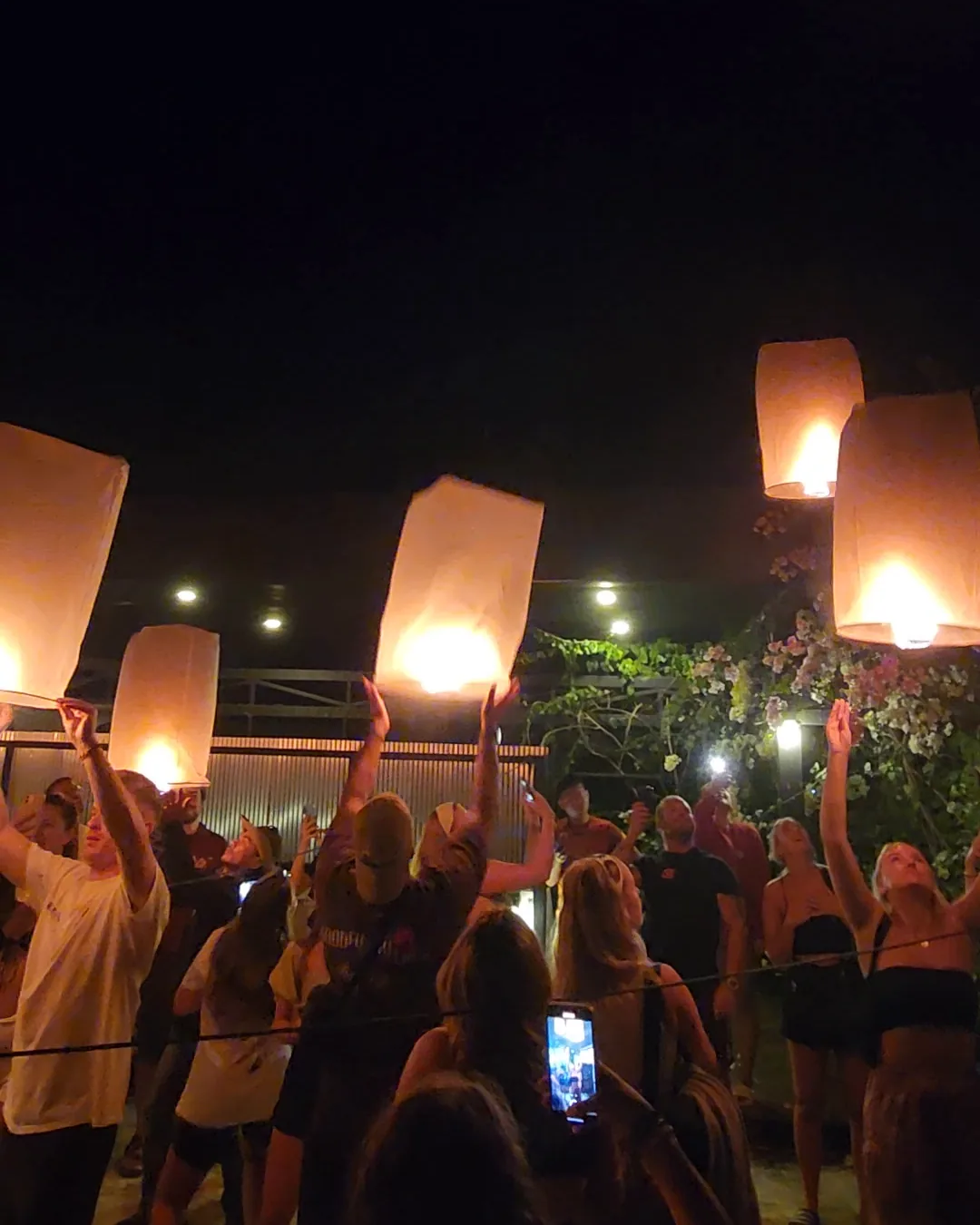
What Yi Peng means: sky lanterns (khom loi) and Lanna light offerings
In Lanna culture, releasing a khom loi (sky lantern) is often an offering to Phra That Chulamani, a heavenly stupa said to house a sacred relic of the Buddha. For many, watching a lantern rise is also a symbolic way to let go of bad fortune and welcome new beginnings.
But sky lanterns are only one part of Yi Peng. The hanging lamps decorating local homes and temples mean something too. Hung from bamboo poles or set out along paths, they’re sacred offerings and festive decorations, and a warm sign of welcome as the full moon arrives.
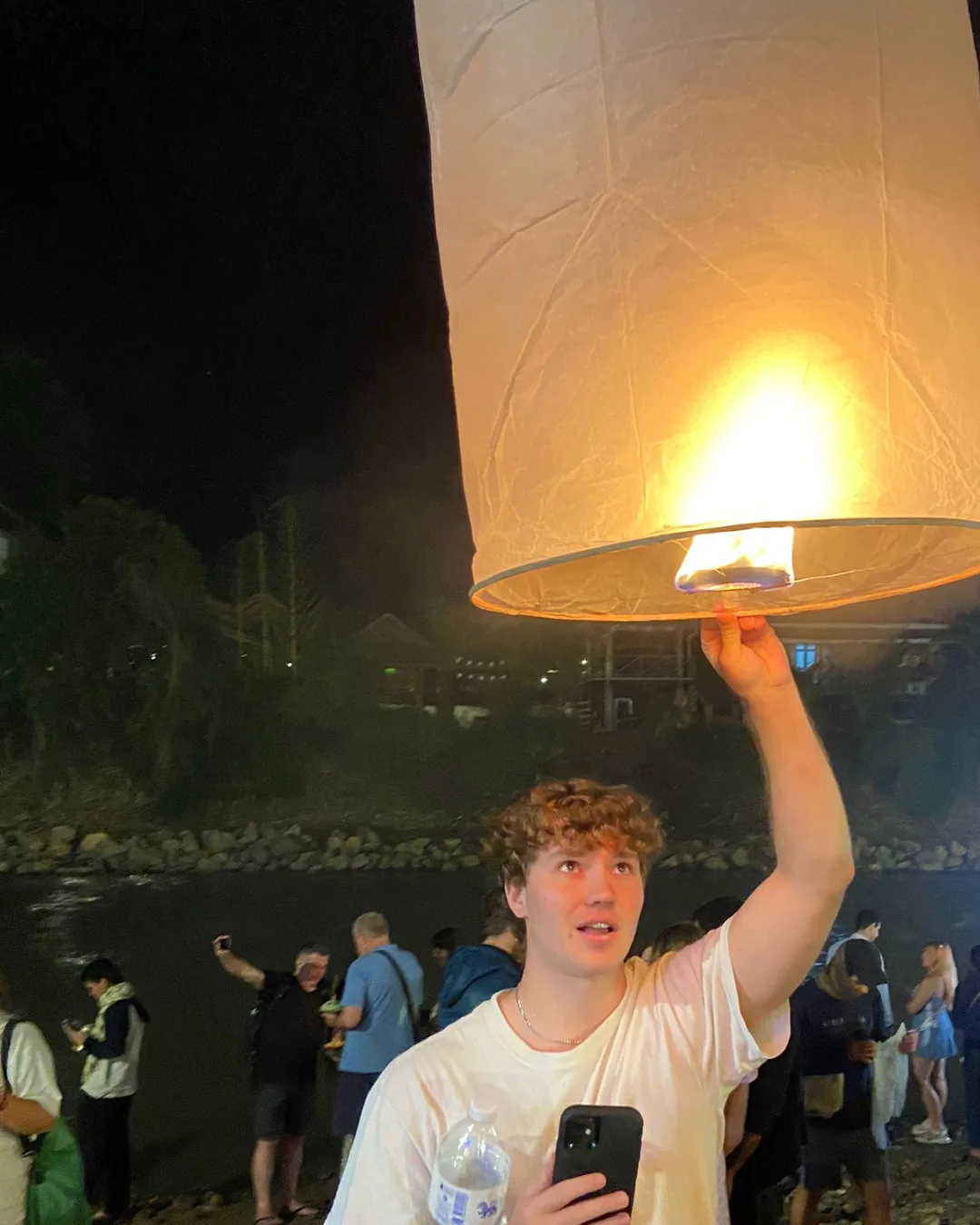
The history of Yi Peng
Yi Peng was a regional tradition long before it became famous for its glowing night skies. Some northern accounts trace its origins back to Hariphunchai, the ancient Mon kingdom centred in modern-day Lamphun, well before the Lanna kingdom was founded. In 1518, a Lanna king made Yi Peng one of the region’s great festivals. No one can say exactly when people started launching sky lanterns, but the tradition of marking the full moon with light has been evolving for centuries.
You can still see that history in the lanterns themselves, which are made to be carried, hung, or released.
The four types of Lanna lanterns
- Khom Thue (โคมถือ): Handheld lanterns carried during evening processions, often shaped like lotus petals or rabbit ears.
- Khom Loi (โคมลอย): The iconic sky lanterns that float into the night air.
- Khom Khwaen (โคมแขวน): Hanging lanterns displayed at temples and homes, crafted in intricate geometric and star shapes.
- Khom Phat (โคมผัด): Rotating lanterns that use the heat of a candle flame to turn an inner shade, casting moving shadows of zodiac symbols.
You may also see phang prathip (ผางประทีป), small oil lamps set out as offerings that bathe temple steps and courtyards in warm light.
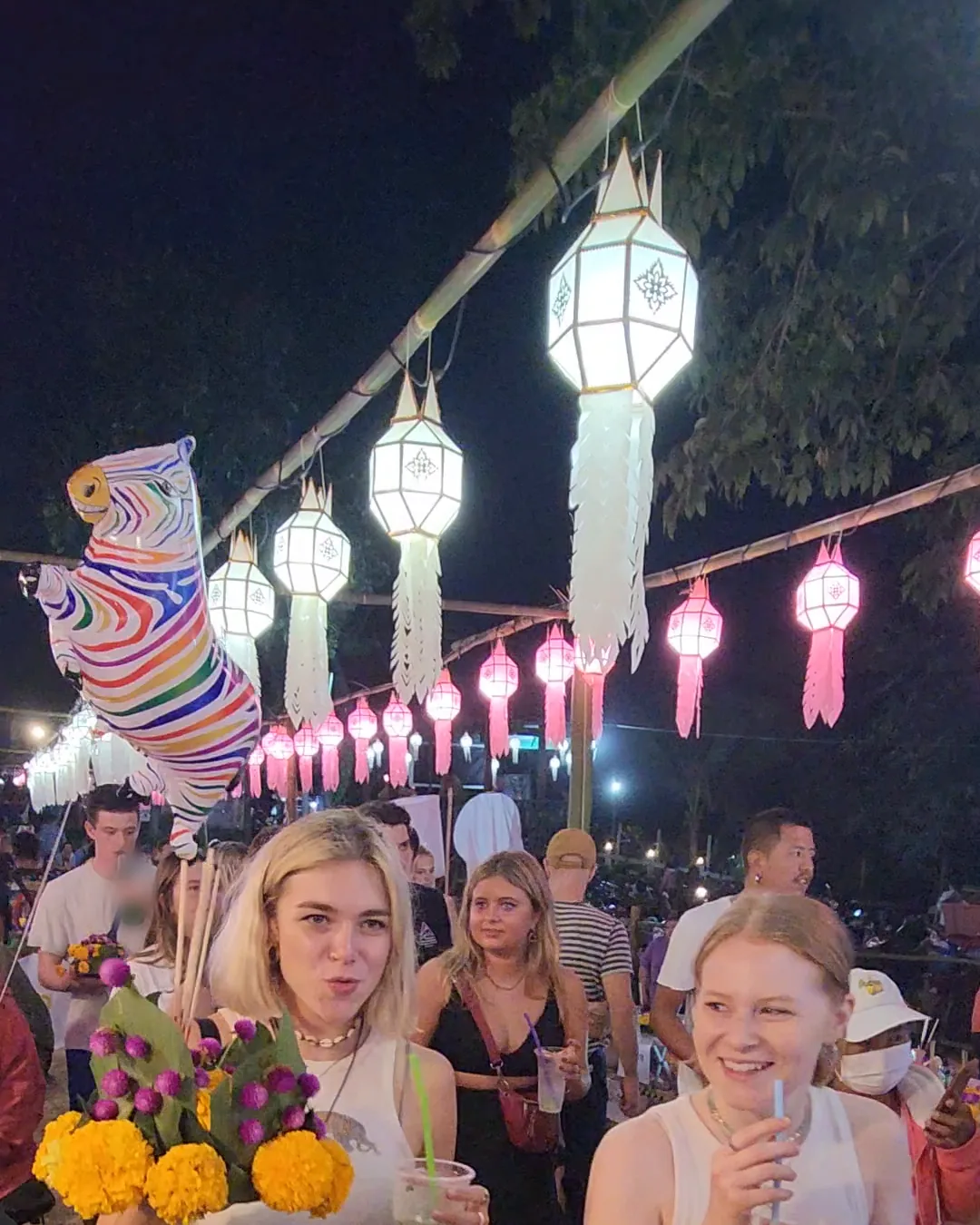
Why do Yi Peng & Loy Krathong happen together?
Northern Thailand’s traditional Lanna calendar counts months differently than the central Thai lunar calendar. The full moon of the second Lanna month (Yi Peng) naturally coincides with the full moon of the twelfth central Thai month (Loy Krathong).
They share the same evening, but they’re two different festivals. Loy Krathong is a tradition centred on water, giving thanks to Phra Mae Khongkha (the water goddess) and river spirits while floating away bad fortune. Yi Peng is Lanna’s festival of light, bringing warmth to the air and land. In Pai, you get to experience both traditions in a single night.
Quick answers
When is Yi Peng in Pai?
This year the full moon is on Tuesday 24 November, and our free night at Nolo Hub Pai starts at 8pm that evening. Yi Peng falls on the full moon of the second month in the traditional Lanna lunar calendar, which is usually in November (the exact date changes each year with the moon). Because Northern Thailand’s Lanna calendar counts two months ahead of central Thailand’s lunar calendar, Yi Peng falls on the exact same night as Loy Krathong.
What is the difference between Yi Peng and Loy Krathong?
They share the same full-moon evening in Northern Thailand, but they are two distinct traditions. Yi Peng is the northern Lanna festival of light — celebrated with hanging temple lanterns, oil lamps (phang prathip), and sky lanterns (khom loi), often offered to the heavenly stupa Phra That Chulamani — while Loy Krathong centres on floating candlelit banana-leaf offerings on the river to thank Phra Mae Khongkha, the goddess of water.
What are the four types of traditional Lanna lanterns?
Traditional Yi Peng lanterns come in four forms: Khom Thue (handheld lanterns carried in evening processions), Khom Loi (the floating sky lanterns released at night), Khom Khwaen (star- and geometric-shaped hanging lanterns at temples and homes), and Khom Phat (spinning lanterns whose inner cylinder turns with the heat of the candle).
How do you celebrate Yi Peng with Nolo Hub Pai?
On the night of the full moon (Tuesday 24 November this year), we gather as a group at Nolo Hub Pai at 8pm for our own lantern release at the hostel (only ever once permission has been given), then take a truck into town together to join the celebrations along the Pai River and head to the bars afterwards. It’s free, and travellers from other hostels are welcome too.
Can I join Nolo Hub Pai’s Yi Peng night if I’m not staying there?
Yes. It’s free, and travellers from other hostels are welcome. Meet us at the hostel at 8pm on Tuesday 24 November, or message us on WhatsApp first. If you’d like to stay with us for the festival, book a bed on our website.